Two days into Philadelphia’s stay-at-home order, I took a set of pictures of “closed for business” signs while walking the dog. Together, the signs give us a crowdsourced snapshot of our collective sense of the problem, our hopes, fears, assumptions, encouragements, and predictions.
In the three days I looked for signs last week, the official number of US COVID-19 cases went up from 54,453 (Wednesday, March 25) to 85,356 (Friday, March 27), and the number of US deaths increased to 1,433. In the week or so since, I’ve seen more closed signs and the case and death counts have increased further.
On my walks I found more than 100 closed-for-business signs—105, to be exact (they were long walks). These signs aren’t written by public health experts. They’re by people whose businesses are on the line now. By carefully looking at how they design their closing signs, we can see how business owners collectively have been making sense of COVID-19 over the last few weeks in this rapidly changing environment.
Not every business is closed, of course, and not every closed business has put out a sign. But the closed signs I saw display a wonderful kind of diversity – from variations in spelling and capitalization, to formality and warmth, confidence and concreteness. As states and cities around the U.S. and the world consider what steps to take, this Q&A helps us reflect on how people are going through this in different ways. Here’s what small businesses are hearing and thinking.
47% of the businesses (49 of 105) referenced a cause for closing down. Most of these references were to some variation of COVID-19: “COVID-19” (12), “Covid-19” (6), “COVID – 19,” “COVID – 19 concerns,” “the COVID-19 pandemic,” “increasing concerns of the COVID-19 pandemic,” “the current COVID-19 situation,” “the impact and spread of COVID-19,” and “the new developments surrounding COVID-19.”
Other signs explained what’s happening by reference to the coronavirus: “virus,” “the virus” (2), “the impact of this virus,” “Coronavirus” (3), “Corona virus,” “the increased health concerns surrounding the spread of the Coronavirus,” “the ongoing coronavirus situation,” “the recent coronavirus scare,” “Corona Virus Pandemic,” “developments regarding the coronavirus,” and “the coronavirus shutdown.”
A few signs included both just to be sure: “Covid-19 (Coronavirus),” “corona virus COVID19,” and “the spread of the COVID-19 coronavirus” (2).
In contrast, some businesses explained what’s happening more indirectly: “an emergency,” “health concerns,” “high strangeness,” “the current crisis,” “the difficult circumstances,” “the global health crisis we are facing at the moment,” “this difficult time,” “this pandemic,” “this shutdown,” “this time,” “this time of uncertainty,” “this unimaginable situation,” and “weird times.”
In this light, it’s striking that more than half of the signs felt they didn’t need to explain why they were closing down. We seem to be developing a strong shared sense of crisis. Perhaps some businesses that didn’t even put up a sign would answer this way, too: Don’t you already know what’s happening?
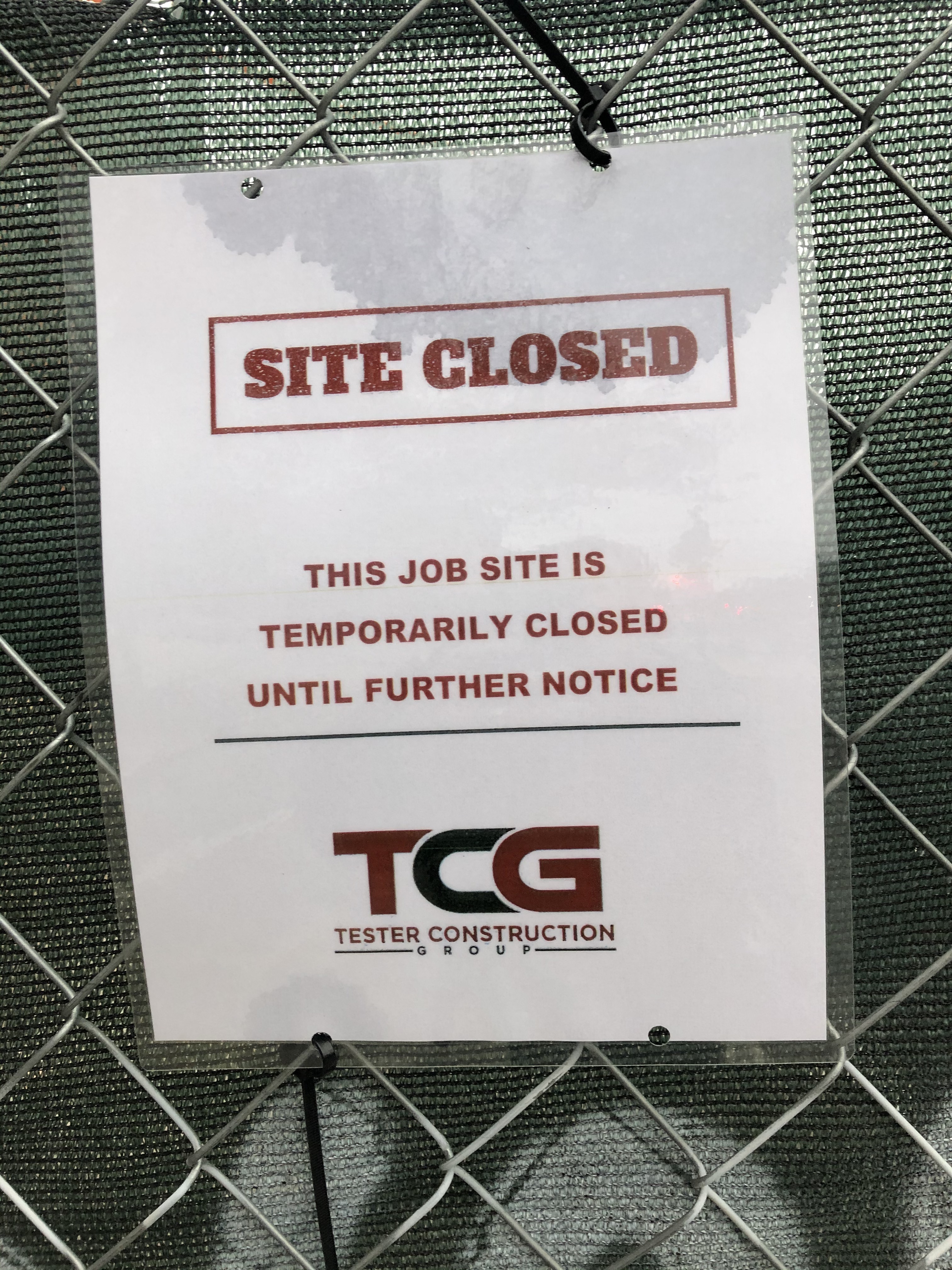
A wide range of businesses have completely closed storefronts with “closed for business” signs up.
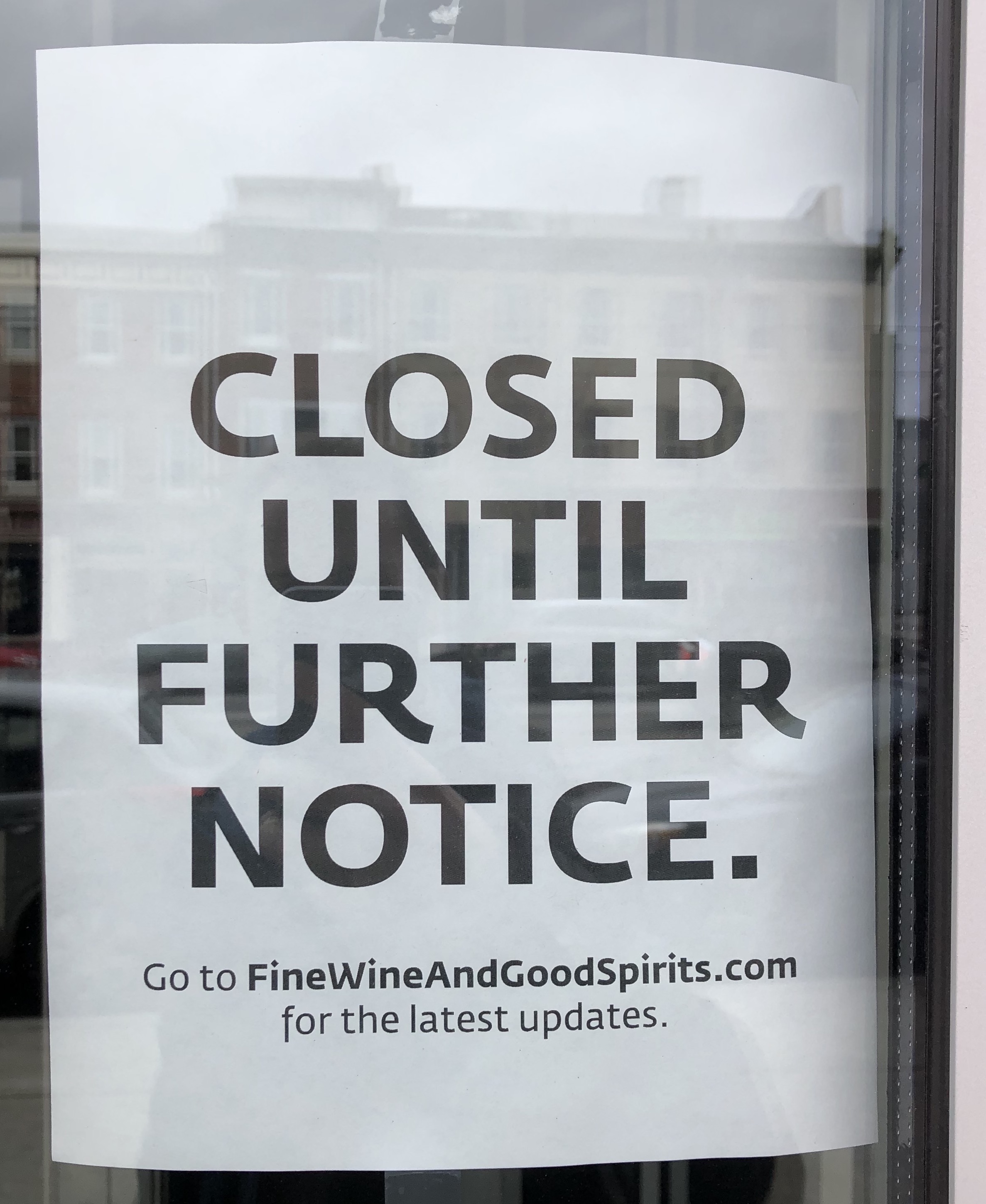
Food: bar (4), coffee (5), restaurant (18), a juice bar, a spices store, a store for prepared foods, and a state-run wine and spirits store.
Pet care: pet grooming, dog park, and dog daycare (2).
Beauty and self-maintenance: beauty supply (2), boutique, clothes (2), consignment, barber (3), tattoo, nail salon (10), massage (2), laser hair removal, hair salon, gym (4), boxing gym (2), jeweler, rock climbing, dry cleaners (3), florist (2), and record albums.
Public services: state representative (3), family services, library, tax services, law firm (2), job training (2), bank (2), home care, senior activity center, doctor, and phone carrier store.
Realty and home: realtor (2), apartment leasing, insurance (2), antiques (2), art (2), art supplies, photos/printing, tiling, flooring, and even construction site (2)!
There are several churches nearby, but none of them had a sign out. There's a mosque nearby that I realized later has a sign, but I didn't pass by it when I was collecting signs. I also didn’t see any grocery stores that have fully closed down by this point.
In other words: Just about everybody.
Only one business directly addressed economic prospects, a boutique that mentions: “During this time, we will continue to support our employees.”
Along these lines, it’s not a “closed for business” sign, but I did observe one COVID-19-related instance of graffiti:
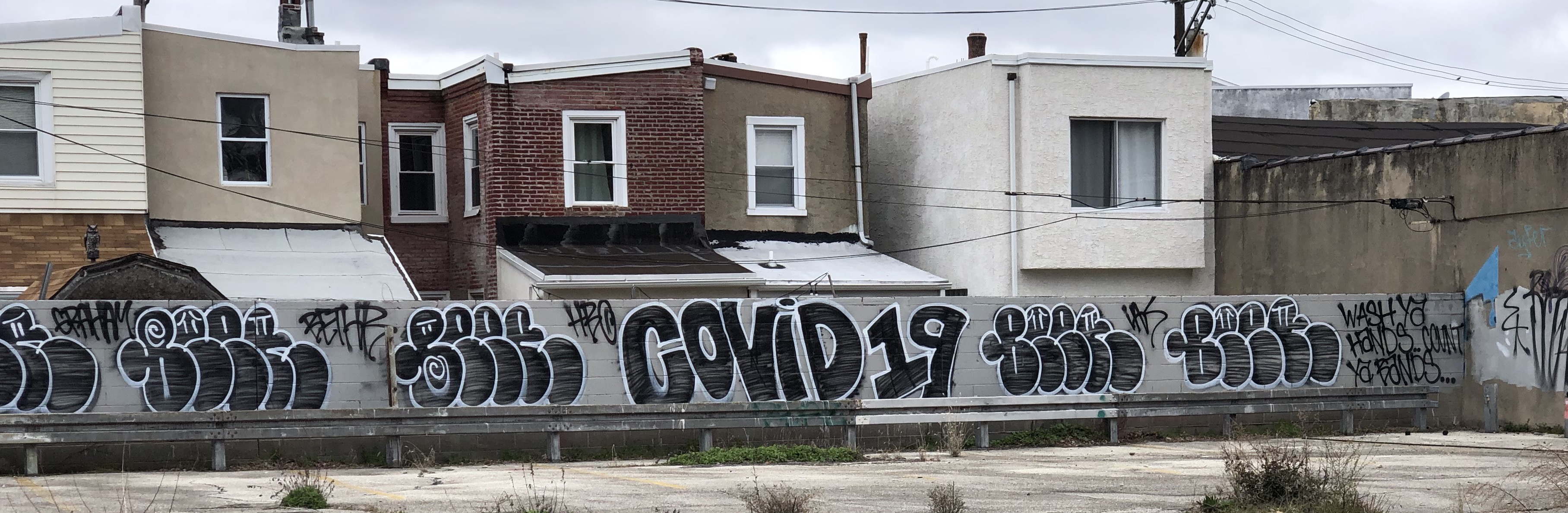
On a long wall facing an abandoned parking lot, a circular pattern is repeated to the left and right. “COVID19” it says in the middle. On the far right is advice: “Wash ya hands.. Count ya bands…” (“Bands” means “wealth,” via “rubberbands” that would hold stacks of dollar bills.) With this rhyme, the graffiti identifies an impending gruesome motivation to stay healthy: keeping a flow of income. From this perspective, the business signs are being delicate and prim by not acknowledging the shutdown’s economic toll.
So businesses answer: We don’t really want to think about it.
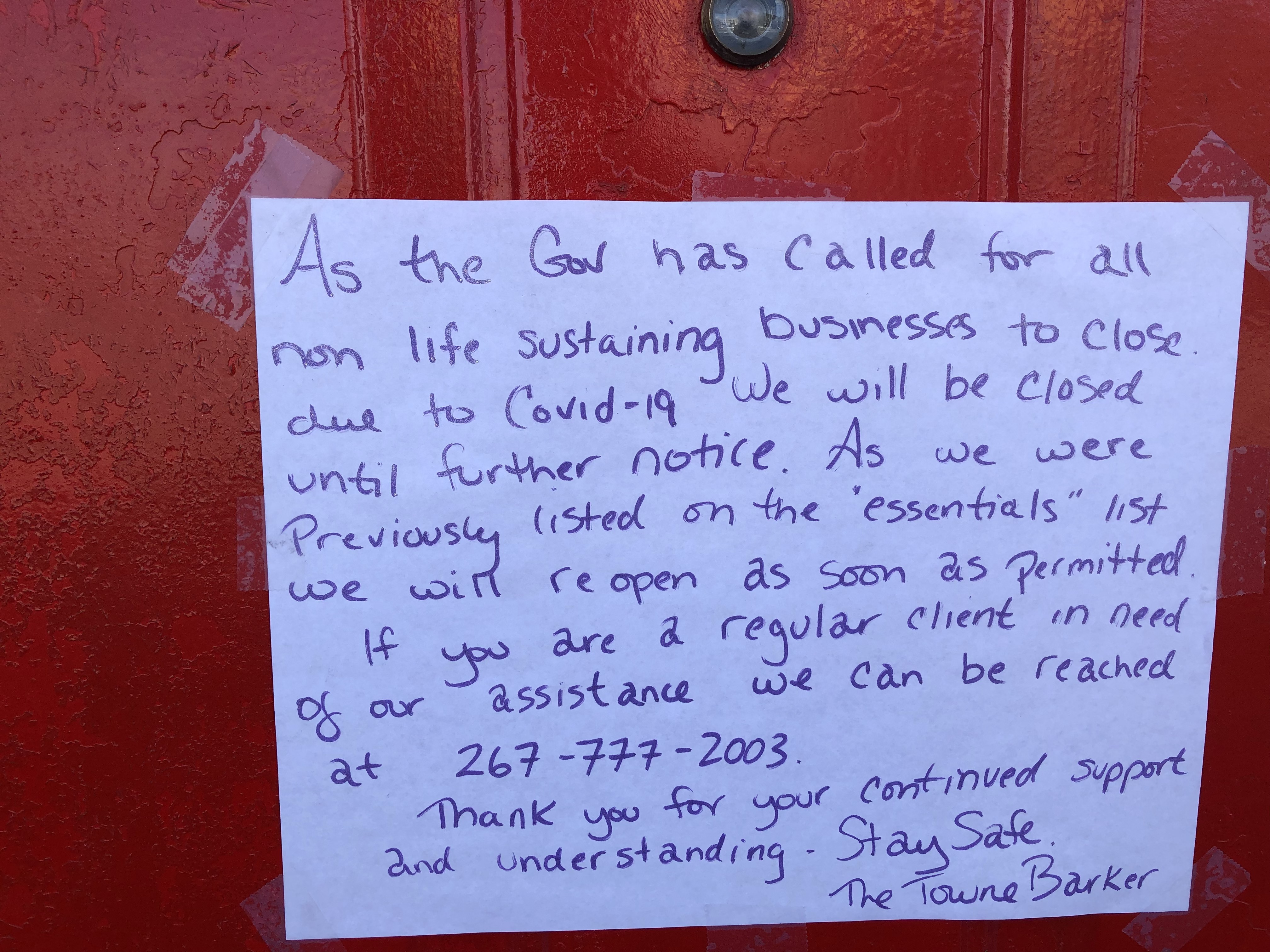
Instead of just saying that the business “is closed” or “will be closed,” 32% of signs explained who made the decision to close.
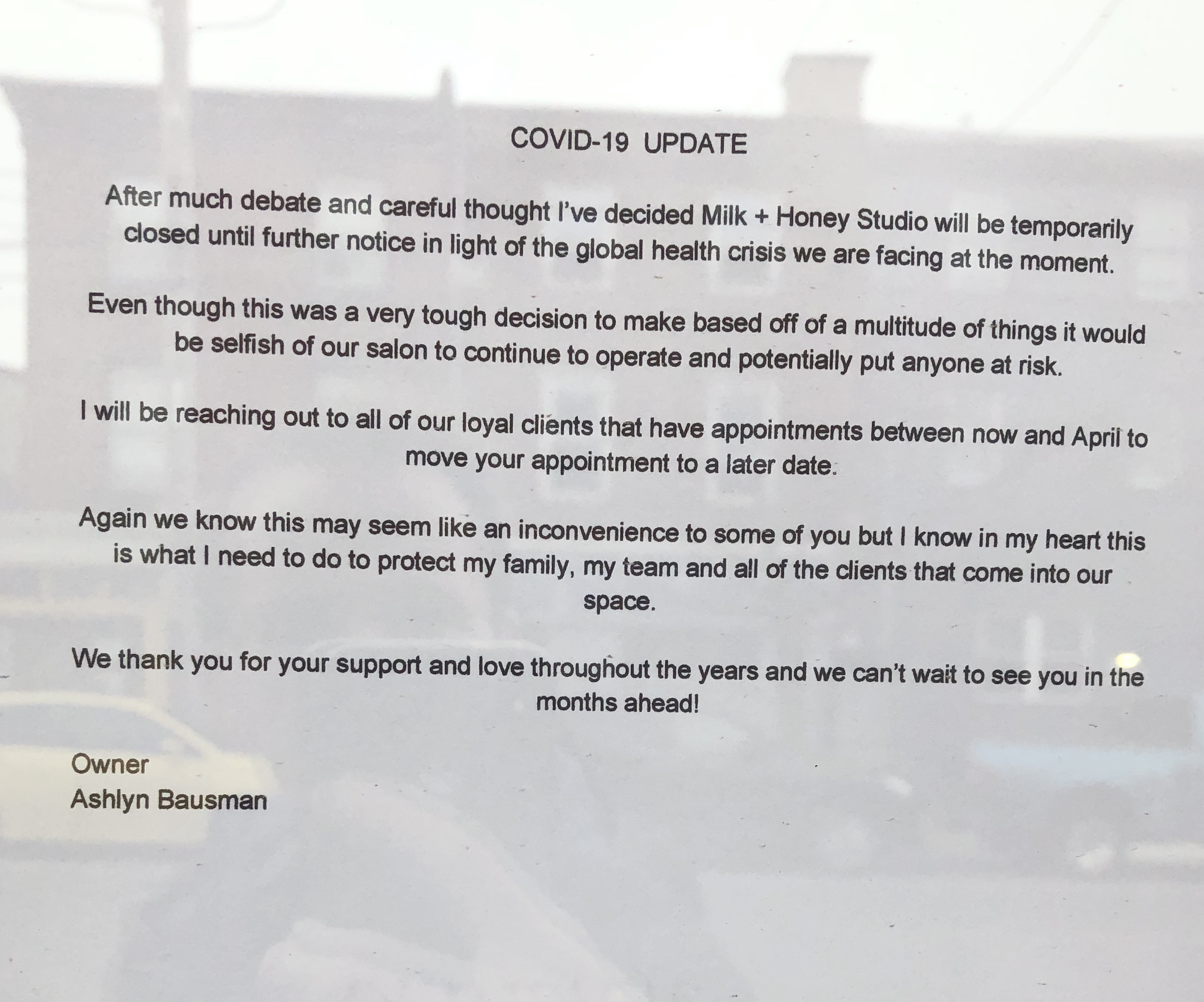
The most frequent was “we” (13) and the related “I” (2), “[company name]” (2) and “the [company name] team.” Similarly, businesses emphasized their own control by describing the process: “after much debate,” “much debate and careful thought,” “out of caution,” and “an abundance of caution.”
However, according to many businesses, it was not solely their choice.
City and national guidance influenced some businesses: “the proposed CDC guidelines, “the City of Philadelphia’s recommendation” (2), “following the Center for Disease Control (CDC) guidelines,” “airing on the side of caution and heeding the CDC’s advice,” and “under the guidance of the center for disease control an prevention (CDC) government agency.”
Some businesses went further by saying they were forced to close: “we are required to shut down,” “Philadelphia Health officials,” “Penn Gov Wolf’s orders,” “Governor Tom Wolf’s Statewide Order,” “Governor Tom Wolf,” “due to City Order,” “City of Philadelphia,” “By Emergency Order by the Mayor and the Health Commissioner of Philadelphia,” “circumstances beyond our control,” “as the Gov has called for all non life sustaining businesses to close,” and “as per both Philadelphia’s and the state’s mandate for all non- essential businesses.”
Thus, responsibility is mixed, with some companies pushing the consensus and others being pushed.
20% of businesses explained what the intended purpose of closing down during a pandemic was.
Many signs emphasized people’s safety by referring to a range of relationships: “for our clients and employees. We care about the safety and wellness of our community,” “for the safety of our customers and staff,” “for the safety of our customers, community and team members,” “for our clientel and employees,” “in the best interest of our employees and our community,” etc.
A few signs were more specific about preventing the transmission of the virus: “to do our part in preventing the spread,” “to help stop the spread,” “to prevent the spread” (2), “in order to flatten the curve and get through this quicky,” “due to high risk of concern of infection,” and simply “social distancing.”
One store said they closed for the day “to deep clean our store.” This is an outlier in not mentioning disease or safety (except maybe ironically).
Unsurprisingly, there’s strong overlap between this question and the last. Of the 10 companies above that disclaimed responsibility for shutting down, none were part of the 21 businesses that described how closing would help the situation.
In summary: closing down mostly follows the rules, but it also keeps all of our relationships safe and healthy by helping stop the spread.
This was the most answered question. 81 out of 105 signs, or a bit more than 75%, weighed in.
The earliest dated closings were on March 15 from a nail salon, library, shoe store/gym, and restaurant, when a Philadelphia order went out.
Many businesses had a fixed sense of how long this will last, whether that’s toward the end of March or the beginning of April: “until Tuesday 03/24/2020,” “until Mar. 27,” “Friday - Friday (03/20/20) - (03/27/20),” (2) “for 3/27,” “temporarily […] March 28th,” (2) “from March 16 to March 30,” “12pm on Tuesday March 17th until Monday, March 30th,” “immediately until Monday, March 30th,” “temporarily […] until to April 1 st.,” “through Monday, April 6th, 2020,” and “temporarily […] April.”
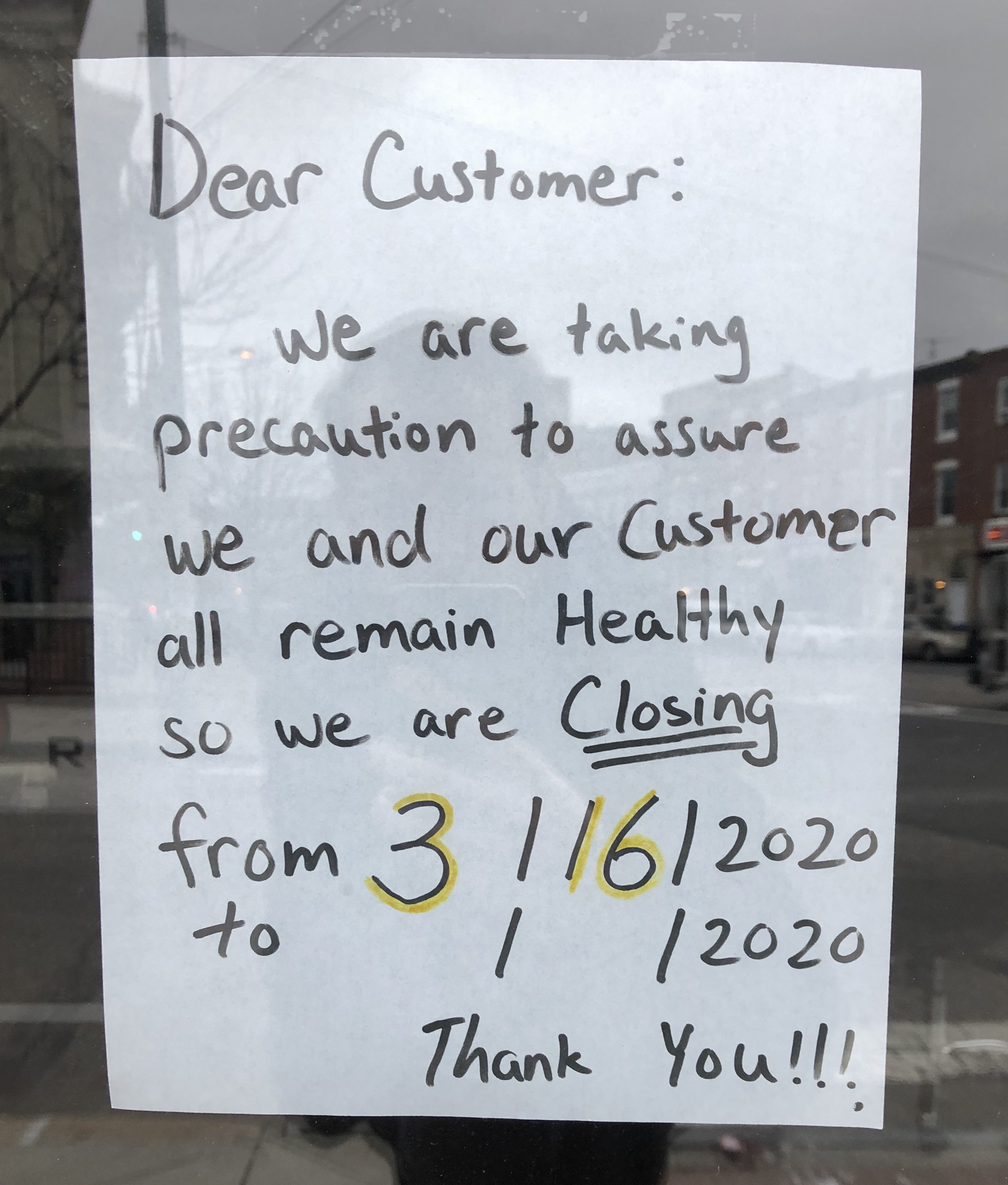
One business (the nail salon at the top of this page) only hazarded that they would reopen sometime in 2020: “from 3/16/2020 to __/__/2020”
A few businesses gave their end date some wiggle room: “this week. We hope to reopen Tuesday, March 24th, but we will be taking it week by week as more information on COVID-19 becomes available,” “until 3-27-20 or pending,” “4/1/2020 (Subject to the City's approval)” (2), and “starting March 17, for at least two weeks.”
Most companies, though, expressed a vague sense of how long this will last, drifting toward ominously long times: “until further notice” (15), “temporarily” (12), “temporarily […] until further notice” (3), “for now,” “for the duration of the current crisis, we intend to reopen when there is better clarity on the situation,” “for the remainder of the quarantine,” “temporarily […] when allowed,” “till further notice,” “until future notice,” “starting Monday, March 16th […] when it's safe,” “Effective March 16th […] temporarily […] until further notice,” “as soon as we can,” “during this time,” “until [crossed out] will open,” “indefinitely,” “for the Foreseeable Future,” “we will reopen!!!!!”
Two companies even used their closing sign to close permanently: “Thank you! It was fun!” “Thanks for all the great years!”
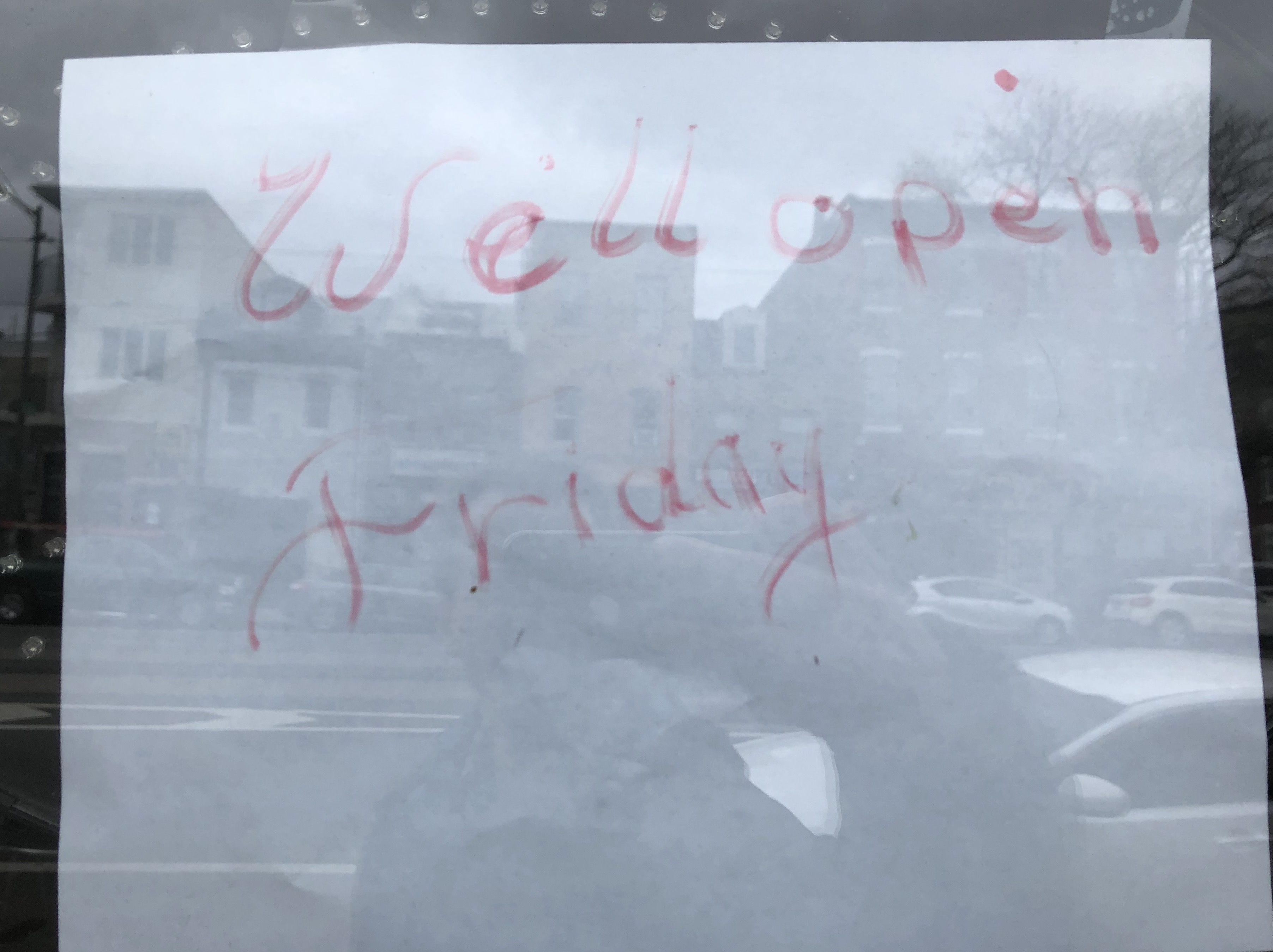
Most interestingly, several companies gave a specific time period, but with no referent. The most cryptic was a doctor’s office whose sign is a ripped half-sheet of paper that only says, “Closed Today.” (Although I think they might actually sometimes be open.) Relatedly, businesses predict that they will open “tomorrow,” “Friday,” “Monday at 9am,” “within 2 weeks,” “when we are allowed to reopen. Hopefully in two weeks but it will be as per government's guidance.” The closures will last “for 2 weeks,” “for the next week / until the city deems it safe,” “for the next week or so,” “for the rest of the month,” “for two weeks,” and “from now until the end of the month.”
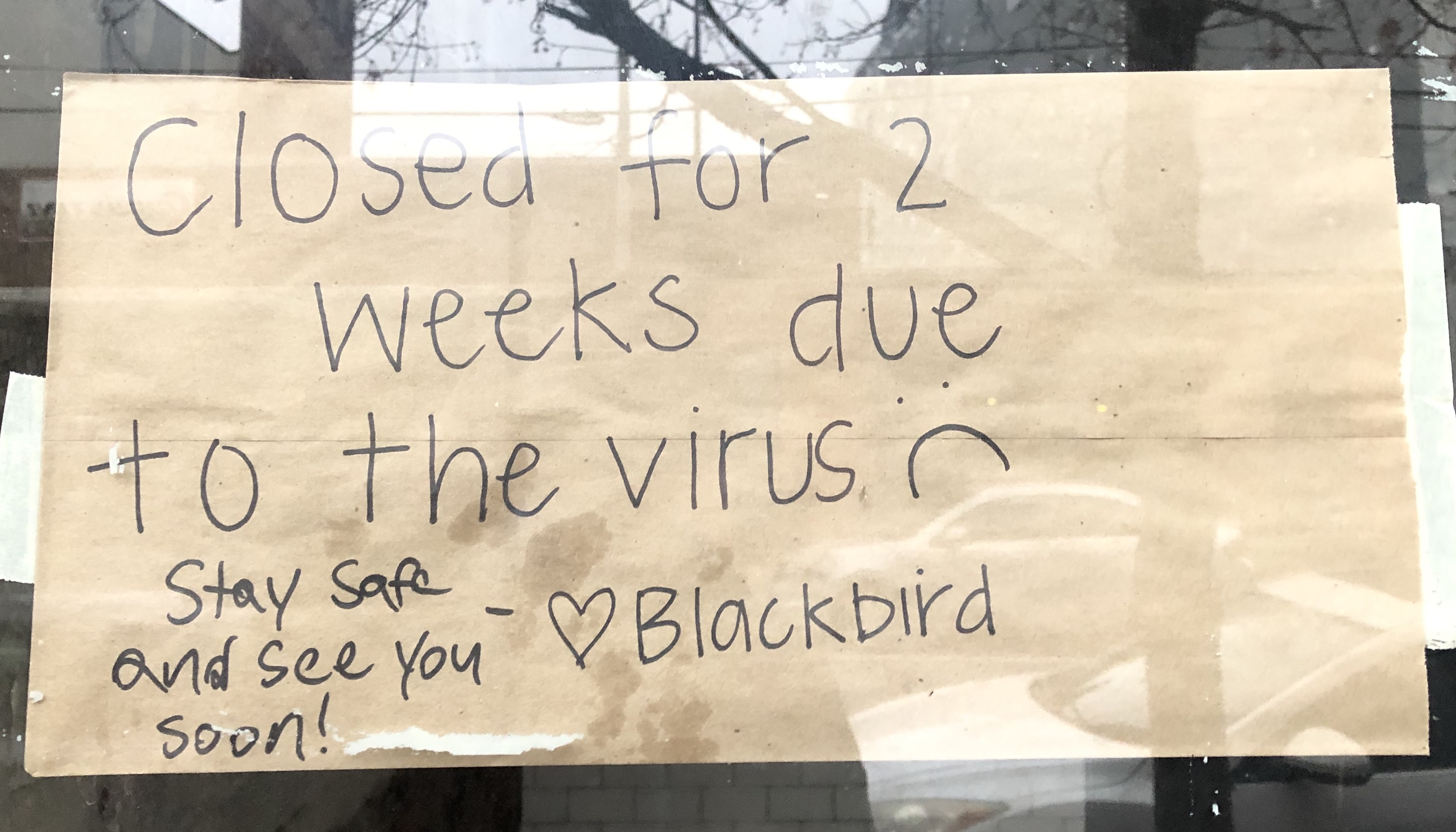
These show that many businesses are thinking in the very short term. The time references assume that people who see them will have enough context to know when “Friday” or “2 weeks” is.
Similarly, most businesses didn’t create signs that build up their brand. 34% were handwritten. Of the 66% that were typed and printed, only about one third included the store’s logo. These design elements reinforce that shutting down is meant to be temporary. These signs are not a lasting way to interact with the store.
The pandemic, then, will affect businesses temporarily, until further notice, until the City allows them to reopen sometime in the next week, month, or year.
With the above questions answered, we can address practical next steps. Almost half of the businesses passed on advice and encouragement, instructing people: “Stay safe” (7), “Stay healthy” (5), “Stay safe + healthy!” “Stay safe, y'all! Wash ya damn hands! :)” “*Wash your hands and STAY HEALTHY everyone! ❤,” “Be safe!” “Be Well” (2), “Be well and stay safe!” “Be well, stay safe,” “Please be safe!” “Please remember to be safe and be kind to each other,” “Stay POSITIVE & Wash your hands,” “Take care and be safe,” “Take care of yourselves and each other. Be well.” “Wash your hands. Cover your cough.” “Wash your hands, drink water and Stay safe!!! ❤❤” etc.
These answers view our physical and mental health as intertwined.
Going further, in the midst of telling people what to do, two businesses shared a particularly affirming vision of who we are: “We are resilient and will overcome this turbulent time. Please be well and look out for one another. […] Stay positive , Wash your hands , & Come back when it's safe! In the meantime… Check us out online!” and “May we come through this episode intact and the stronger for it.”
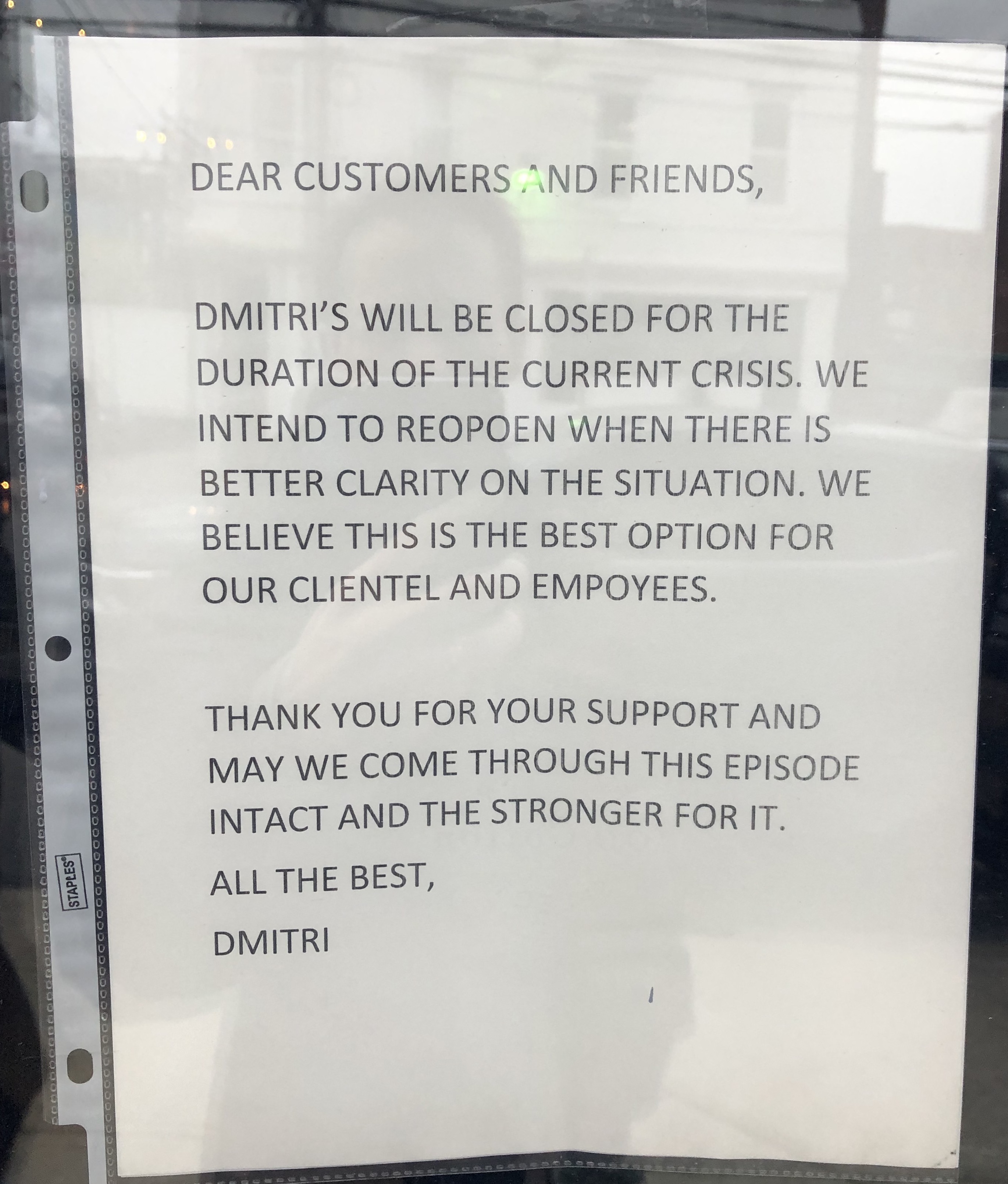
In a more economic direction, two businesses told people to shop with small businesses: “Please continue to show your support for us and the other Small Businesses in Philadelphia that make this city the wonderful place it is,” and “Please continue to support us and other small businesses while we are closed by shopping online.”
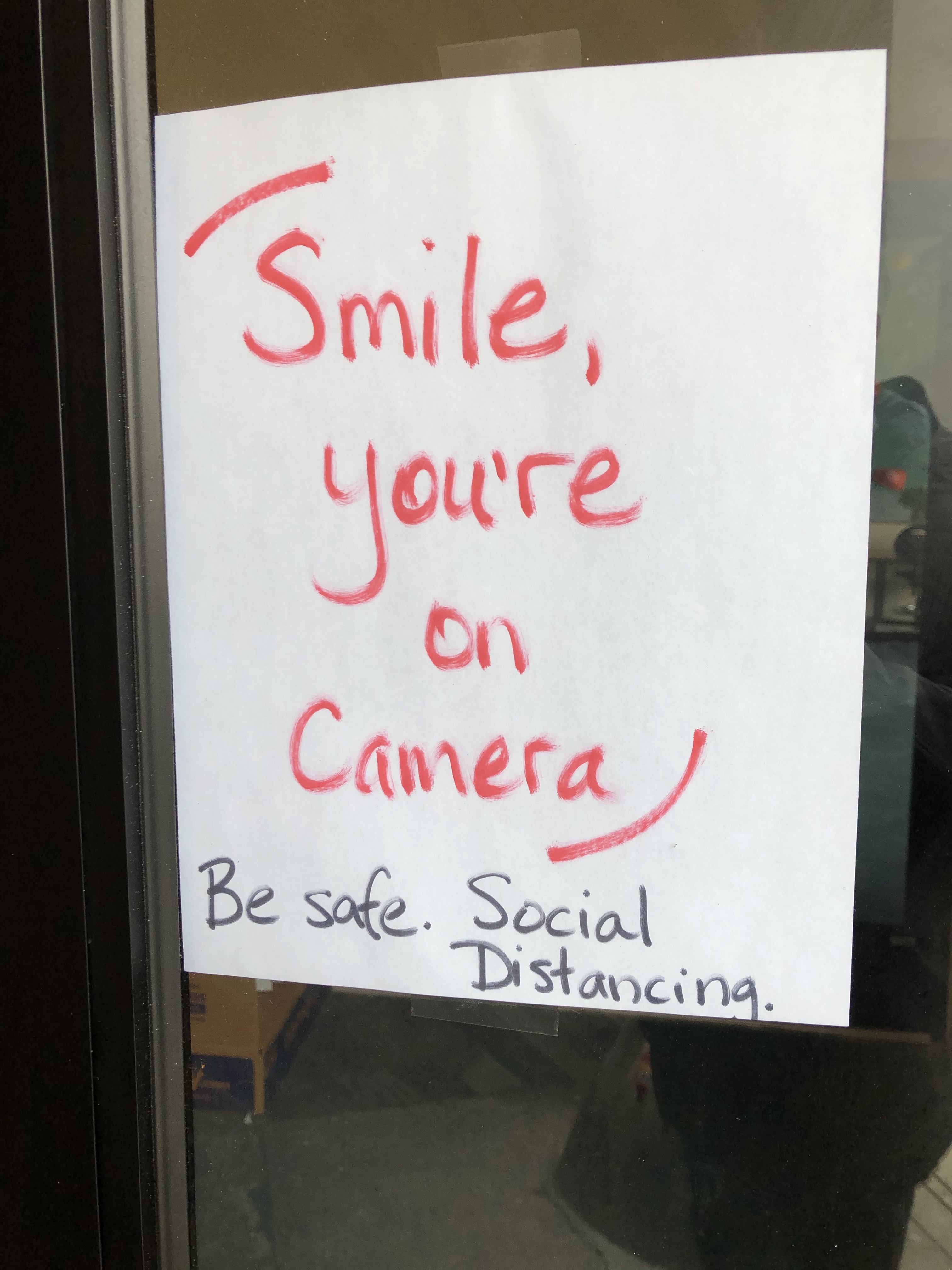
A rock climbing gym, strangely, took the chance to tell people not to break in while they were closed: “Smile, you're on camera. Be safe.”
Finally, a few businesses instructed people to interact with the business: “We ask that you continue too be patient with us,” “Access your account 24/7 with our Mobile Banking app or at [website],” “Access our digital resources 24/7,” “Follow us,” and “Get your taxes done remotely from anywhere by a real, live tax expert with our Virtual Tax Pro.”
Overall, be well, be safe, be healthy, wash your hands, and buy online.
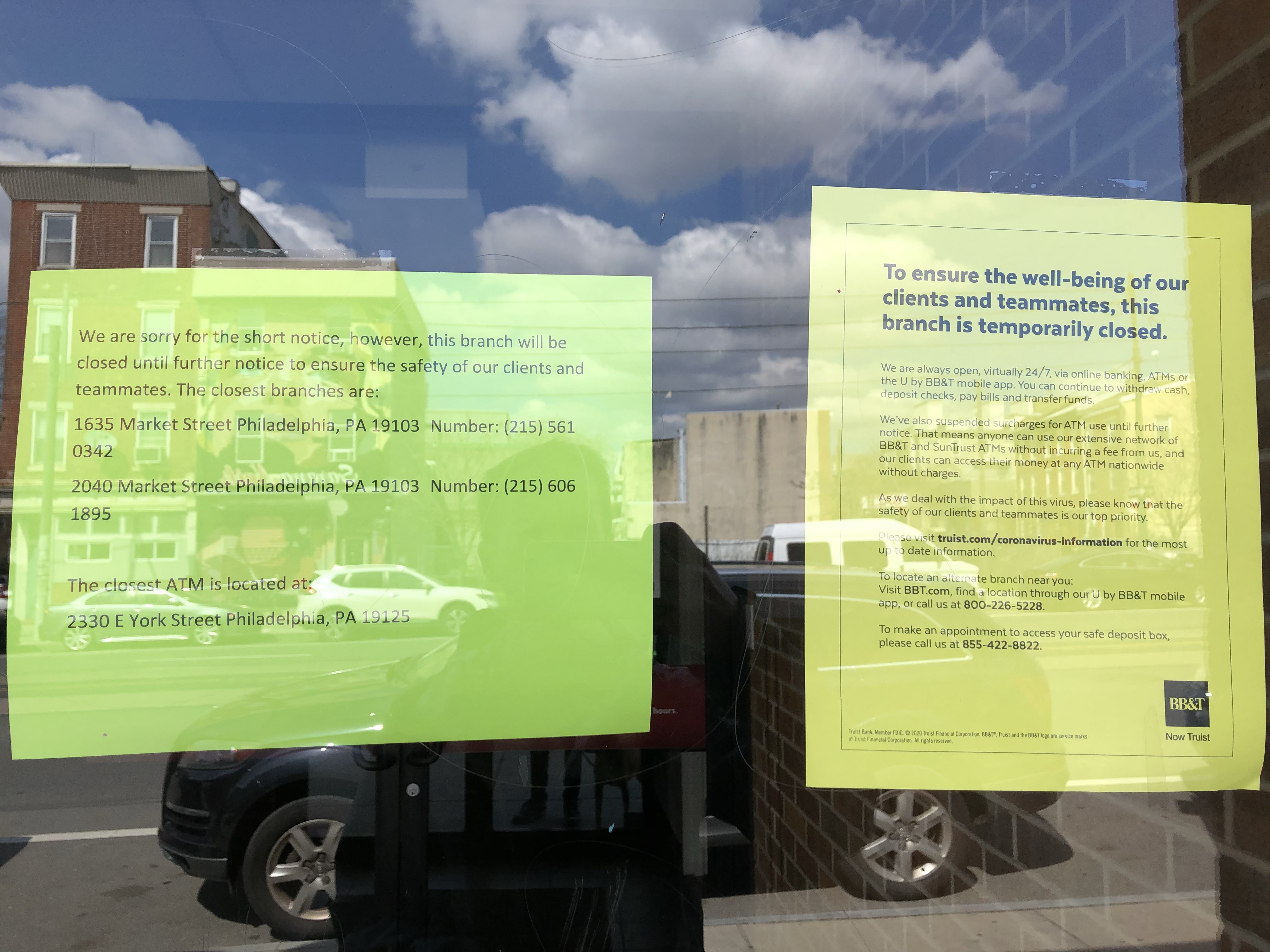
45% of businesses included more information, usually for how people could get in touch with them if needed: “Please call Philip with any Questions you may have,” “Call to speak to a staff person,” “Contact us at [phone] or [email],” etc.
Of the 48 signs to provide additional information, 18 businesses recommended getting in touch by phone, 16 by website, 10 by email, 7 by Instagram, 3 by “social media,” 2 by Twitter, 2 by Facebook, and 2 businesses suggested their own app. 4 businesses even suggested another physical location. Several gave multiple forms of contact information for those with questions or needs. 3 businesses had additional signs in Spanish.
Don’t be confused, go online or call the business if you need anything.
In conclusion, this study shows that last week businesses were expressing a strong shared sense of crisis, are just about all affected, don’t want to think about economic implications, are closing mostly to follow the rules, have very short-term expectations about re-opening, encourage people to stay healthy physically and mentally, and want to still be in touch with people. I think this is ultimately both heartwarming but also sobering.
*I'm making all the signs I saw available as an archive for pandemic historians or anyone else who wants to take a closer look. Almost every sign is followed by a picture of that business storefront. Download archive of all 105 Philadelphia closed signs (450MB).
